Showing posts with label Family. Show all posts

Friday, October 3, 2025

Thomas Gataker on Seeking a Good Wife

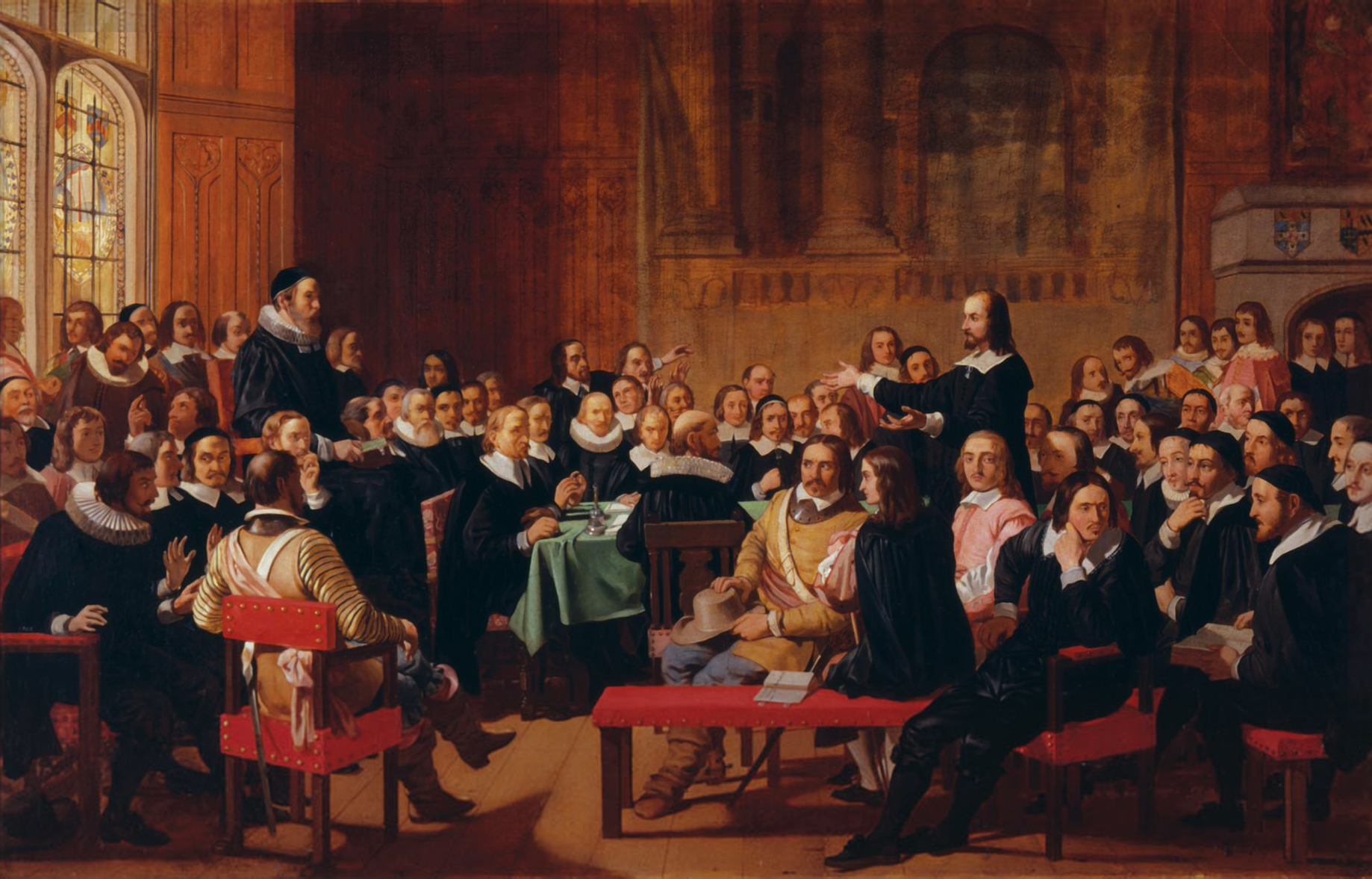
Thomas Gataker (1574-1654) was a Puritan minister in the Church of England and a member of the Westminster Assembly. In 1623, he published two wedding sermons, one of which was entitled, "A Wife In Deed" and based on Proverbs 18:22, "He that findeth a Wife, findeth Good; and obtaineth Favour of God." You can read the sermon at this link. In contains many quotable portions. For example, he wrote,
There is much want of comfort then in Solitude; much Comfort in Society. But there is no Society more near, more entire, more needful, more kindly, more delightful, more comfortable, more constant, more continual, than the Society of Man and Wife; the main Root, Source and Original of all other Societies: Which of all others therefore Man is naturally most inclined unto…
He said that a good wife is 
The best Companion in Wealth;
The fittest and readiest Assistant in Work;
The greatest Comfort in Crosses and griefs;
The only warrantable and comfortable Means of Issue and posterity;
A singular and sovereign Remedy ordained by God against Incontinency;
And the greatest Grace and Honour, that can be, to him that hath her.
The portion I particularly want to share in this post is what he said about seeking a good wife. (In all of these quotes I modernize the spelling, but keep original capitalization and italics. I am also not including the marginal references, which you can find in the original.) He wrote, 
But how may a man come by such a Wife, as is here spoken of? may some say: such a one as shall be a means of so much good to him that hath her?

She must be sought; saith Solomon. For finding implieth seeking. And He that seeketh, findeth; saith our Saviour. We must not think, because Solomon elsewhere saith, that Houses and inheritance are of the Fathers, but a good Wife is of God; that therefore no industry is to be used on our part, but that men should lie still, or sit them down, expecting that God should drop Wives down out of the clouds for them, as Towns were said to come into Timotheus his toils, while he slept. No; unless we seek, we are not like to find. And if by seeking we may find, if after much search made, we may light on such an one, we are well.

Such a Wife then must be sought.

And so sent Abraham his Servant to seek a Wife for his Son Isaac. So Naomi telleth Ruth her Daughter in Law, that she will seek out some fit match for her.

There is good Reason to seek such an one in two Respects:

First in regard of the Rarity, the Difficulty. Because such are not easily found. Where may we find such a Man? saith Pharaoh of Joseph, implying that such an other as he could very hardly be found. And, Where may a Man find such a Woman? saith Solomon. As he saith elsewhere of a faithful Friend; Many men will boast, each one of his honesty; but where shall a man find a Friend truly Faithful; one that indeed deserveth that name? So many Women may promise great matters of themselves, or others undertake for them: But it is no easy matter, for all that, to find out a good Wife, one that answereth the Name she beareth. Many Priests, and yet Few Priests too; saith one of the Ancients: many in Name, but few in effect. So many Women, and few Wives, may one well say; few such, among many, as Solomon here entreateth of. Good Wives are rare Creatures, as well as trusty Friends are. And though I dare not say of them, as Elihu of an able Pastor, Solomon of a Wise Man, and some other of a true Friend; One such of a thousand. Yet may I well and safely say, that as well here as else-where, The greater Part exceedeth the better: there is more drossy matter than pure metal; more pebbles than pearls. As the Cynic sometime sought for a Man in a multitude of Men: so may such a Wife as Solomon here speaketh of, be sought, yea and scarce found sometime, among a multitude of Women.

Secondly, In regard of the worth and dignity. It is well worth a man's labour. He need not think much of his search, if he have good success in it. As the difficulty of finding requireth it; so the dignity of the thing sought requiteth it. It is no wisdom indeed to seek after toys and trifles, matters of no moment, that will not recompense a man's pains, when without much difficulty they cannot be had. But a worthy Woman is a matter of worth. She is well worthy the seeking. She is a greater blessing than either House or Inheritance: and her price is above Pearls. And if there be so much seeking generally on all hands after the one, much more may there justly be as much after the other.

But how must she be sought then?

I answer: First by due and diligent consideration of, and careful search and inquiry into the nature, quality, and disposition, and into the life, courses and conversation, of the party motioned or affected for Marriage: whether she be so qualified as a Wife ought to be, and as is fit for one to be that should be thy Wife. For fitness in special, as well as goodness in general, is one main ground of the good and benefit that a Wife is to bring to him, whom she is matched unto.

Secondly, by using the help and taking the advice of Friends. A course especially to be embraced and entertained of those that are themselves unexperienced, or that are yet under the power of others. So did Jacob herein follow his Father Isaac's advice; contrary to the practice of his Brother Esau. And Ruth was content to be ruled by her Mother in Law Naomi, though having not the power over her of a natural Parent.

Thirdly, by seeking unto those that are the Parents or Governors of such as they affect or desire, being yet under the power of such. So did Abraham's Servant deal with the Friends of Rebekah. And Shechem (though he had been before indeed too forward) with the Brethren of Dinah, and with her Father Jacob, by his Father Hamor; the very light of Nature leading and directing them thereunto.

Fourthly and principally by Prayer to God. As did Abraham's Servant, when he was sent to seek a Wife for his young Master: And as Isaac did when he dismissed his Son Jacob with Instructions and charge what course to take concerning a Wife.

For (and so pass we to the next Point) God is the principal Donor here. He that will find a Wife, saith Solomon, must obtain her of God. And, House and inheritance are of the Fathers; but a prudent Wife is of God. From God therefore it is that a Good Wife must be had. 

Thursday, July 20, 2023

Desire "for" or "contrary to" in Genesis 3:16


I think the English Standard Version (ESV) had Genesis 3:16 right in its 2011 edition and messed up with the 2016 edition when it came to this verse. 

ESV 2011: “Your desire shall be for your husband, and he shall rule over you.”

ESV 2016: “Your desire shall be contrary to your husband, but he shall rule over you.”

The 2011 translation make more sense on a number of levels, is more compatible with historical exegesis, and is the option most compatible with similar uses of the phrase in Genesis 4:7 and Song of Solomon 7:10. 

This sentence is a reaffirmation of the creation order in the context of the fall. It was indirectly a chastisement, in that they were fallen and this subjection was less voluntary and agreeable. But it was primarily a correction of the woman's waywardness and a mercy that reaffirmed marriage and the fulfillment of their original design. They would not be separated. Man would not be alone and the woman would still be a helper fit for him, under his rule and care.

The basic idea of the preposition in question, אֵל, is that of "toward." Since we are speaking of desire, it is most natural to translate it as "for." When a person's desire is directed toward an object, we say that he or she has a desire for it. 

The 2011 and 2016 translations offer very different meanings. In this context, “for” is a good thing and “contrary” is a bad thing. In Genesis 4:7, sin’s desire was for Cain, and that was bad because sin is bad. A “desire for” is the idea of possessing or having, which is good in the case of a husband and wife (Song 7:10, Gen. 3:16), but not good when sin wants to have you (Gen. 4:7). 

Likewise, "rule" in Genesis is a good thing, but it looks differently depending on what is being ruled. A bad thing like sin will be ruled by being crushed (4:7), while good things like day and night (1:18), a wife (3:16), a household (24:2), brothers (37:8), or Egypt (45:8, 26) will be ruled in a way that provides care, direction, protection, and well-being in a way that befits the particular relationship. Of course, Christ's benevolent rule of his church, exercised with self-sacrificial love, is the ideal for the way this is supposed to work in marriage (Eph. 1:22-23, 5:22-33). 

The pronouncements in Genesis 3:14-19 are actions of God. They are God's response to sin, expressing both his justice and his mercy. They are not merely his description of the situation, except for the "because" clauses in verses 14 and 17. It would be odd for God to make the woman's desire contrary to her husband, but it does make sense for him to reaffirm his design. As Matthew Henry observed, God put enmity between the woman and the serpent, not between the woman and the man. Thank God! 

Wednesday, June 7, 2023

"As a father..."


All those whom God justifies, he also adopts as his children in and for his only begotten Son. God is our Father in heaven through this grace of adoption. Accordingly, as our confession of faith says, we “are pitied, protected, provided for, and chastened by him as by a father…” (WCF 12). 

God designed and fitted men for the calling of fatherhood, and this nature is evident and proverbial even among fallen man. From earthly fatherhood we get a basic concept of the fatherhood of God, which is free of all the errors and sins of fallen man. In turn, the fatherhood of God gives us an image of true fatherhood, to which all earthy fathers ought to conform themselves as they reject sinful distortions and pursue godliness in Christ. Consider these Bible verses that describe fatherly traits and our heavenly Father:

"The LORD your God who goes before you will himself fight for you, just as he did for you in Egypt before your eyes, and in the wilderness, where you have seen how the LORD your God carried you, as a man carries his son, all the way that you went until you came to this place." 
(Deuteronomy 1:30–31)

“Know then in your heart that, as a man disciplines his son, the LORD your God disciplines you.” 
(Deuteronomy 8:5)

“As a father shows compassion to his children, so the LORD shows compassion to those who fear him.”
(Psalm 103:13) 

“My son, do not despise the LORD’s discipline or be weary of his reproof, for the LORD reproves him whom he loves, as a father the son in whom he delights.”
(Proverbs 3:11–12)

“They shall be mine, says the LORD of hosts, in the day when I make up my treasured possession, and I will spare them as a man spares his son who serves him.”
(Malachi 3:17) 

“Or which one of you, if his son asks him for bread, will give him a stone? Or if he asks for a fish, will give him a serpent? If you then, who are evil, know how to give good gifts to your children, how much more will your Father who is in heaven give good things to those who ask him!”
(Matthew 7:9-11) 

“For you know how, like a father with his children, we exhorted each one of you and encouraged you and charged you to walk in a manner worthy of God, who calls you into his own kingdom and glory.”
(1 Thessalonians 2:11–12) 

“It is for discipline that you have to endure. God is treating you as sons. For what son is there whom his father does not discipline? If you are left without discipline, in which all have participated, then you are illegitimate children and not sons. Besides this, we have had earthly fathers who disciplined us and we respected them. Shall we not much more be subject to the Father of spirits and live? For they disciplined us for a short time as it seemed best to them, but he disciplines us for our good, that we may share his holiness.”
(Hebrews 12:7–10)

Wednesday, March 1, 2023

A Letter to the Exiles


Jeremiah 29 records a letter that God directed Jeremiah to write to the Jews who had already been carried off into exile around 597 BC (the final fall of Jerusalem occurred around 587 BC). This letter came to a community that was dislocated. They had become a minority and their whole world had been shaken. What were they to do? The letter provides an important message for the church today. It helps us to address the question: what should Christians do when they find themselves increasingly marginalized and caught up in the tumult of the nations?

In the letter Jeremiah stressed that this exile was not a mistake, that it would last for seventy years, and that despite appearances God's intentions were for their good. God's plans for them were for "for welfare and not for evil," to give them "a future and a hope" (29:11). He had sent them there, and he intended to bless them. “I have sent into exile… I will…bring you back…I will hear you…I will be found by you…I will restore your fortunes and gather you from all the nations” (29:4, 10-14). God cares for his people, disposes all things for their good, and restores their fortunes in his timing.

Not all of Israel shared in this plan. Some were cast off and killed. Some would be uprooted. Yet a remnant would be blessed. The letter described how some had missed out on this: they had ignored God’s words and opposed his prophets. Some had proclaimed false and rebellious prophecies and committed adultery. That was the wrong way. 

So how should a person respond in difficult times to this message of a future and a hope?

1. Call upon the Lord with faith.

"Then you will call upon me and come and pray to me, and I will hear you." (Jeremiah 29:12) 

Verses 12-13 describe how the people would receive God's restoration. They would find him through prayer. They would be blessed as they sought the Lord with sincerity. These years were intended to train the exiles to look to God with faith. And through faith, they would participate in this future he had prepared for them.

When Daniel read Jeremiah's prophecies at the end of those 70 years, he acted upon it by praying a prayer recorded in Daniel 9. “O Lord, hear; O Lord, forgive. O Lord, pay attention and act. Delay not, for your own sake…” (Daniel 9:19) 

In other words, believe in God and his promises and call upon him to fulfill them. Persevere in faith, in prayer, in believing expectation. It is by faith in God and his promises that we participate in God’s grace. Those who seek the Lord with sincere faith will not be cast out. “They were broken off because of their unbelief, but you stand fast through faith” (Romans 11:20).

Like the exiles, we continue to await more of what is promised, both in what we expect in history and eternity. God’s word here teaches you to persevere in seeking the Lord and believing his promises.

And by this faith, a believer acts upon God’s word. The following points describe how God’s people express their faith by their deeds.

2. Build and plant.

“Build houses and live in them; plant gardens and eat their produce.” (Jeremiah 29:5)

Imagine them having just arrived in Babylon. What should they do? Should they expect a quick return? Should they give up hope of a return altogether? In either case, they would lack motivation to work on long-term projects.

But Jeremiah told them to invest themselves in improving their situation, digging in for a while, building homes and planting gardens. Just because they were exiles, that didn’t mean they were supposed to hold back and live in tents. They would be there for seventy years, so it was worth it to dig in. And their stay was not forever, so it was worth it to persevere. There was light at the end of the tunnel. 

Likewise, Christians are called to fulfill their callings and serve the Lord where they are. Dig in. Do not be held back by a pseudo-spiritual pietism that interprets our identity as exiles as if that means we shrink back from earthy things. You are called to take dominion of the earth in accord with your particular calling, building and planting. Develop where you live and use what you have so that it may be fruitful and productive. Do not linger in indecision, but work with what you have to maintain yourselves and others.

The apostle Paul sharply rebuked those who lived in idleness. He said, “we urge you, brothers … to aspire to live quietly, and to mind your own affairs, and to work with your hands, as we instructed you, so that you may walk properly before outsiders and be dependent on no one” (1 Thess. 4:10–12).

3. Get married and have children.

"Take wives and have sons and daughters; take wives for your sons, and give your daughters in marriage, that they may bear sons and daughters; multiply there, and do not decrease." (Jeremiah 29:6) 

Get married. Get your children married. They are imperatives, just as in Paul’s epistles (1 Cor. 7:2, 1 Tim. 5:14). While there are exceptions (1 Cor. 7:7-9, 1 Tim. 5:9-10), there is a general responsibility to seek marriage.

Getting married involves a number of steps. It includes preparing for marriage. But marriage is a goal to work towards. When a person is ready, finding a spouse is a task to pursue.

Notice in Jeremiah's letter that both singles and their parents have responsibility. Both those who are getting married and their parents should be working towards this goal together. Unfortunately, in our day parents are either generally uninvolved or involved in a primarily negative manner, with a focus on preventing bad marriages. But the emphasis here is positive. Parents should help their children to get married to good spouses and to form good marriages. Again, this includes preparation (character, skills, calling) and finding a spouse.

Why? To multiply and increase. Marriage provides the basis for the future of a community. One reason for marriage is to provide offspring. If the exiles were to multiply, their singles would need to get married and have children. 

Married couples should have children, as this perpetuates and multiplies the human race (Gen. 1:28), their nation (Prov. 14:28), the church (Mal. 2:15), and their family (Ps. 127:3, 128:3-4). In particular, the focus in Jeremiah 29 is on God’s people multiplying and increasing. Certainly that happens by evangelism as well, but this is in addition to natural increase and the covenantal nurture of children. 

This instruction implies a community of believers. The community of believers is a vital part of this survival plan! One cannot survive for the long term without a community. The community (or communities) of believers provides the spouses and it is the community of believers which is being increased. The letter is addressed to the exiles of Judah, a community with recognized leaders, their elders, priests, and prophets.

God teaches his people in this text to think multi-generationally: God’s plans extend beyond one generation. God also teaches his people to live with hope: there is a future for their children and grandchildren. So many people today do not have enough hope or enough purpose to have children. They don’t mind if their people, their family, or their church dies out. But God teaches his people to think otherwise. The church of Jesus Christ has a purpose and a future and a hope!

Therefore, even when the present is difficult or discouraging, the call to get married and have children remains. Yes, there may be some like Jeremiah and Paul, with the gift of continency, who may remain single, especially in times of distress. But the community in general are called to get married and multiply.

Remember Exodus 1:12: “But the more they were oppressed, the more they multiplied and the more they spread abroad. And the Egyptians were in dread of the people of Israel.”

4. Seek the welfare of the city where you dwell and pray for it.

"But seek the welfare of the city where I have sent you into exile, and pray to the LORD on its behalf, for in its welfare you will find your welfare." (Jeremiah 29:7) 

I was talking to someone recently about patriotism. Is it a good thing? Should one be devoted to one’s country? Even when your country does many wicked things? Certainly this devotion can be taken to excess when it is pursued without qualification. Jeremiah was thought to be unpatriotic when he criticized his people and rulers and told them to surrender to Babylon. But consider this: the Jews were told by God to seek the welfare of Babylonian communities. Babylon was not godly - it was pagan. And not only were the Jews not religiously united with the Babylonians, they were not of the same nation either. They were doubly strangers. 

You and I may rightly feel alienated by the secularism of our country. We should not assimilate into secularism. Parents must be diligent to teach their children God's word and raise them to keep the way of the Lord. But if the Jews were to seek the welfare of Babylonian cities, how much more should we "seek the welfare of the city" when it is our own nation and people? You should seek the welfare of your city, county, state, and country. You should work for the good of those around you.

Think of biblical examples. Joseph brought blessing to his Egyptian household, prison, and country. Daniel was a blessing to the Babylonian and Persian kingdoms. Mordecai saved the Persian king’s life and served in his administration. Nehemiah served a Persian king as cupbearer.

How does your work bless others around you? How do you contribute to the welfare, the well-being, of your community or country? Your contributions might not be as visible as those of Daniel and Mordecai and yet still serve an important role in our interconnected society. Figure it out and work on it with diligence, knowing that you are serving the Lord. You are also serving your own interest! “...for in its welfare you will find your welfare.”

One way to seek the welfare of your community that God specifies is to pray for it. Similarly, Paul urges the saints to pray for kings and all in high positions, “that we may lead a peaceful and quiet life, godly and dignified in every way” (1 Timothy 2:2).

5. Do not be immobilized by false prophets.

Do not be misled by false prophets. Instead, hold fast to the word of God. This is the focus of verses 15-32. God will judge false prophets (Jer. 29:22-23, 31-32, cp. Rev. 2-3). Do not be misled by messages of despair or messages of quick and easy prosperity. Be careful about who and what you listen to and where those messages are leading you. False prophets and teaches often lead people away from godliness into speculation, idleness, and/or immorality. 

Conclusion 

God intends good for his people. His church has a future and a hope. Therefore, call upon him with with faith, and exercise that faith: build and plant, get married and multiply, seek the well-being of your community. Do not be immobilized by false teachers, but get to work, serving the Lord. Be fruitful and multiply and fill the earth and subdue it through faith in the Lord Jesus Christ.

Wednesday, April 20, 2022

Honor Thy Father and Thy Mother


Q. 63: Which is the fifth commandment?
Answer: The fifth commandment is, Honour thy father and thy mother; that thy days may be long upon the land which the Lord thy God giveth thee.

Q. 64: What is required in the fifth commandment?
Answer: The fifth commandment requireth the preserving the honor, and performing the duties, belonging to everyone in their several places and relations, as superiors, inferiors, or equals. (WSC)

The fifth commandment commands us to honor our fathers and mothers. This honor is expressed through obedience, deference, reverence, and care in old age, as I have explained in more detail here. Parents give us life. We begin as helpless infants in their hands, to be nourished and brought up unto maturity by them. We do not come into this world independent and sovereign. We are cast upon our parents and receive a wealth of unearned benefits from them and from past generations. Our basic attitude toward them then ought to be one of reverence and gratitude, of filial piety.

The catechism recognizes that this command has many implications that are brought out in the rest of Scripture. Scripture uses the terms of “mother” and “father” to describe, not only natural parents, but other superiors as well (e.g. 1 Tim. 5:1-2, 1 Cor. 10:1, Gen. 45:8, 2 Kings 5:13, Is. 49:23, Acts 7:2, Phil. 1:10). Similar honor is to be given, as the Larger Catechism says, to “all superiors in age and gifts; and especially such as, by God’s ordinance, are over us in place of authority, whether in family, church, or commonwealth.” And being given this honor and/or authority, these superiors are therefore responsible to God for its use. Superiors have obligations to those under them. The brief answers of the Shorter Catechism on this commandment are greatly expanded in questions and answers 123-133 of the Larger Catechism.

All of this is quite contrary to the egalitarianism is that is common in our society. It should be noted that the catechism uses the terms “superiors, inferiors, or equals” to refer to rank and status, not value. As Paul says, while the members of the body are different, yet every member of the body is essential, and none should be despised (1 Cor. 12). Scripture speaks of a spiritual equality which coexists with the structured order of society (e.g. 1 Cor. 7:21-24, Job 31:13-15, 1 Peter 3:7). These truths are complementary, because the order that God has appointed in society does not pit us against each other (although human depravity does), but obligates us to each other for our mutual good. In his design, we are interdependent, born into a web of human relations, in which each contributes and receives over the course of his or her life, with obligations binding together the weak and strong.

Monday, September 6, 2021

Abortion, Feminism, and the Creation Order

The point of anti-abortion laws is the same as existing laws against murder. The pro-life position argues that abortion is murder, the unjust taking of innocent human life.

This is why many of the objections to anti-abortion laws make no sense to someone who is pro-life. For example, exceptions for rape and incest do not make sense. Rape and incest should be punished, but they do not justify the killing of an innocent party.

This is not a "war against women." The focus of anti-abortion laws and the pro-life position is on the life of the unborn child. Its goal is not to punish or suppress women - in fact, the pro-life movement has resulted in many charitable efforts to help pregnant women and their children in difficult circumstances.

With that said, egalitarian feminism is waging a war, with unborn children as casualties. This is not true of all feminists - some have opposed abortion, pointing to other solutions such as birth control, adoption, and accommodations in the work place. But a certain type of feminism believes that women need access to abortion to eliminate the difference between men and women and preserve individual autonomy. With its individualist and egalitarian principles, it comes into conflict with nature (that is, the way things are designed to work).

In general, we naturally desire sex, which naturally leads to pregnancy, which naturally leads to distinctions between men and women and their abilities. Fathers and mothers have natural obligations to their children, just as those children will have reciprocal obligations to their parents. All this naturally leads to traditional marriage as the best arrangement for these factors, all of this being designed by God, including marriage.

The conservative and biblical approach is to strengthen marriage and the family (Ex. 20:12-14, 1 Cor. 7:2, 1 Tim. 5:4, 8-16). This includes passing laws such as those that limit divorce (Matt. 19:3-9), hold men accountable for premarital sex (Ex. 22:16-17), and punish rapists (Deut. 22:25-27). It also involves extended family and other institutions stepping in when the family breaks down (1 Tim. 5:3-10, Deut. 14:29, Ruth 1-4). Its approach is to exhort people to fulfill their natural obligations through custom, education, and law. But the modern theory that affirms a woman’s right to kill her unborn child for the sake of autonomy and equality ultimately denies that such obligations exist, which is a big problem. Like Cain, they distance themselves from the victim and disown their responsibility. "Am I my child's keeper?" As Carl Trueman puts it,
“Abortion is simply one way in which a fictional notion of what it means to be human is reflected in our culture and enabled by law. In denying the obligation of the mother and father to the child, legal abortion denies not simply the personhood of the child in the womb, but also the humanity of the mother and the father.” 

Tuesday, December 15, 2020

Augustine on Promoting Peace on Earth

In his book, The City of God (AD 426), Augustine makes the following comments about how the city of God, driven by love for God and others, promotes "well-ordered concord" in society. In particular, he notes that this is especially worked out in the life of the household. 

"But as this divine Master inculcates two precepts — the love of God and the love of our neighbor — and as in these precepts a man finds three things he has to love —God, himself, and his neighbor — and that he who loves God loves himself thereby, it follows that he must endeavor to get his neighbor to love God, since he is ordered to love his neighbor as himself. He ought to make this endeavor in behalf of his wife, his children, his household, all within his reach, even as he would wish his neighbor to do the same for him if he needed it; and consequently he will be at peace, or in well-ordered concord, with all men, as far as in him lies. And this is the order of this concord, that a man, in the first place, injure no one, and, in the second, do good to every one he can reach. 

"Primarily, therefore, his own household are his care, for the law of nature and of society gives him readier access to them and greater opportunity of serving them. And hence the apostle says, "Now, if any provide not for his own, and specially for those of his own house, he has denied the faith, and is worse than an infidel" (1 Timothy 5:8). This is the origin of domestic peace, or the well-ordered concord of those in the family who rule and those who obey. For they who care for the rest rule — the husband the wife, the parents the children, the masters the servants; and they who are cared for obey — the women their husbands, the children their parents, the servants their masters. But in the family of the just man who lives by faith and is as yet a pilgrim journeying on to the celestial city, even those who rule serve those whom they seem to command; for they rule not from a love of power, but from a sense of the duty they owe to others — not because they are proud of authority, but because they love mercy." (Augustine, The City of God, 19.14, available online here.)


Tuesday, January 21, 2020

Ten Theses on Genesis 2:24


“Therefore a man shall leave his father and his mother 
and hold fast to his wife, and they shall become one flesh.” 
Genesis 2:24

This verse is a key text regarding humanity, marriage, and family. It comes at the conclusion to the account of creation and is quoted at least four times in the New Testament. It continues to play a role in many discussions today, and so I propose the following ten theses, along with ten sub-theses, regarding some of its meaning and implications.

1. This verse teaches God’s intention for marriage to be a lifelong union of one man and one woman, bound exclusively to each other.

2. This verse asserts the priority of the marriage bond over all other human relationships, even over the relationship between parent and child.

3. This verse asserts that a child’s relation to his or her parents will change, and that parents should raise their children towards the responsibility and freedom of maturity.
  a. Other passages expect men to assume adult responsibilities when they reach the age of majority. In biblical Israel, men reached the age of majority at age twenty and were then responsible for military service, voting, and the head tax (Num. 1:2-3, 1 Chron. 12:38, Ex. 30:13-14).

4. This verse teaches that marriage is a normal part of reaching adulthood.
   a. Indeed, it is the duty of those of marriageable age to find a spouse and get married, unless they have a gift of continency (1 Cor. 7:2-9, 1 Tim. 5:13-14).
   b. As man and woman came from one flesh, so they naturally are designed to become one flesh, and unless this is consummated in marriage, fallen humanity will normally seek an illegitimate outlet for this natural design.

5. The context of this verse teaches that parents have a duty to help their children find callings and spouses when they reach adulthood.
  a. God provided a calling and bride for Adam, the “son of God” (Luke 3:38), just as he later provided a calling and bride (the church) for his only-begotten Son (John 6:38-39, Rev. 21:2). This pattern is reflected in the duties of human parents (Jer. 29:6, Ruth 3:1, Gen. 24:2-4, Eph. 6:4).
  b. Therefore, parents should prepare their children with the skills and character necessary for these responsibilities. 
  c. Parents should make these decisions in communication with their children. The initial suggestion of a spouse can come from parent or child. Both the couple and their parents should consent to the marriage; parents should not force marriage without the son or daughter’s consent, nor withhold consent without just cause.
  d. While the Bible certainly recognizes occasions when parents cannot afford it, it is expected that parents will help provide a financial basis for their children as they are able (Prov. 19:14, 2 Cor. 12:14). 

6. This verse and its context (Gen. 2:15-24, 3:12) teach that the man leaves his parents and receives his wife, in distinction from the woman who is given to the man.

7. This verse does not require the man to stay at his father’s house until marriage.
  a. A man might leave home to prepare for marriage and find a spouse. Isaac sent Jacob away to Laban to find and win a wife (Gen. 28:1-5). The heavenly Father sent the Son to earth to win his bride, the church (John 6:38-39, Rev. 21:2).
  b. As children mature and transition into adulthood, parents may delegate some of their authority to others for a temporary period of further training, such as in apprenticeship (one type of “slavery” in Ex. 21:3 and Deut. 15:12-18) and discipleship (1 Kings 19:19-21, Matt. 4:21-22, Acts 16:3).

8. This verse does not require a man to physically leave his father’s house when he gets married.
  a. This can be seen from numerous biblical examples, it being common, though not required, for three or four generations to live in one household under the authority of the patriarch (Josh. 7:14-18, 24). “Secession” from this arrangement was possible and sometimes for the best (Gen. 31), but it was often to everyone’s advantage to stay together. This is an uncommon arrangement today in America, but it is not an arrangement forbidden by Scripture. 

9. The context of this verse (Gen. 2:15-20) teaches that a man should be proven as a responsible worker and have a sense for his mission and his need for a helper before he gets married.

10. This verse does not teach that a man’s responsibility to honor and support his parents ends when he gets married (e.g. Prov. 23:22, 1 Kings 2:19, Matt. 15:1-9).

Friday, January 17, 2020

2020 Men’s Advance: Keep the Faith!

Check out the new video below, in which I talk about the upcoming Men's Advance, which our church will host on May 2nd, 2020. In the video below I explain this year's theme, which is "Keep the Faith." The speakers this year will be myself and Christian McShaffrey, pastor at Five Solas Church (OPC). For more information about the event and to register, follow this link.


Thursday, January 9, 2020

Egalitarianism vs. Christian Hierarchy

It may seem like the victory of egalitarianism is now complete. As one article has declared, “Turning back this half century of feminist advance is impossible (leaving aside the fact that is deeply undesirable).”[1] While conservatives may try to make a stand for traditional values, they seem inevitably just one step behind the progressives. Yet, those who would declare the victory of egalitarianism do not account for one thing: that God may yet arise and scatter His enemies. “As smoke is driven away, so you shall drive them away; as wax melts before fire, so the wicked shall perish before God!” (Psalm 68:2) There is a God in the heavens and He laughs at the rebellion of the nations.

This may seem like harsh words for egalitarians. Perhaps it would be good to explain what I mean by egalitarianism. Nearly all Christians agree that individuals are of equal value and importance. They agree that every individual is made in the image of God. The point at which egalitarians differ from Christian orthodoxy is that they claim for every individual the same rights, privileges, duties, and authority.

Christianity, though, recognizes the importance of “preserving the honor, and performing the duties, belonging to everyone in their several places and relations, as superiors, inferiors, or equals” (Westminster Shorter Catechism, Q. 65). This does not refer to superiority and inferiority in worth or importance, but rather in authority, privilege, age, and gifts. The catechism’s footnotes refer to the human relations of husband and wife, parent and child, and master and servant. These relations are the basic types of biblical hierarchical relations (Col. 3:18-4:1) and are foundational for other hierarchical relations in society. As the Westminster Larger Catechism explains in one of its eleven questions on the fifth commandment, "By father and mother, in the fifth commandment, are meant, not only natural parents, but all superiors in age and gifts; and especially such as, by God's ordinance, are over us in place of authority, whether in family, church, or commonwealth" (Q. 124).

Christian hierarchy is not to be confused with other forms of hierarchy. Christian hierarchy is covenantal. The superior and inferior are connected and both have duties and privileges, even if they are different. For the superior to abuse the inferior is to hurt himself. For the inferior to rebel against the superior is to undermine his own authority. The biblical picture of the body and its interrelated parts is vital to this understanding (Eph. 5:22-33, 1 Cor. 12). Also, a certain equality under the sovereignty of God is a moderating factor, as we see in Job 31:13-15 and Ephesians 6:5-9.

Egalitarianism seeks to undermine and flatten these biblical relations. Feminism, youth rebellion, and radical individualism are expressions of this movement. Eventually a leveling of society, as found in communism and revolutionary democracy, is the end. The theory that all individuals are naturally born with the same rights, privileges, duties, and authority led to the social contract theories of Hobbes and Rousseau. This led to the French Revolution and centralized tyranny. As he faced this revolution of egalitarianism, John Randolph of Roanoke (1773-1833) declared that “I love liberty, I hate equality.” Egalitarians sought to destroy the mediating institutions, like the household and church, and left all men equal under the the single will of the people as declared by the state. In a feudal or hierarchical arrangement there were various relations that limited each other and were limited under God. This system of checks and balances leads to liberty. There might be someone under your authority, but you are also under authority (e.g. a man might be head of his family, but he also must submit to his elders at church).

The Bible does not teach egalitarianism. It does teach harmony, unity, and mutual honor and duties, but this is different than sameness. This biblical hierarchy has two reinforcing reasons. When Paul argued against women teaching or exercising authority over men in the church he appealed to creation and the fall: “For Adam was formed first, then Eve; and Adam was not deceived, but the woman was deceived and became a transgressor” (1 Timothy 2:12-14). These are universal truths about humanity, not limited to some particular situation. As Genesis 2-3 recounts, man and women were created differently, and then they sinned differently and were cursed differently. This is an true today as it is in Paul’s day. If man had never fell, there would still be “inferiors, superiors, and equals,” yet sin and the curse has made these distinctions even greater. Slavery, for example, is a result of sin and the curse. Some kind of slavery is inevitable in society during this age, though it is not desirable. God’s grace and redemption does not obliterate differences between people, but it does lessen the effects of sin over time. Thus slavery is softened and progressively minimized among Christians (1 Cor. 7:21-24). But our duties towards “inferiors, superiors, and equals” are more established by God’s grace, rather than lessened. Rebellion against God’s appointed order is a sign of rebellion, not grace.

Do not try hammering nails with a screw driver. Submission to God requires that we realize our created nature. We are not whatever we want to be. We are what God has created us to be. We are not inferior in worth just because we cannot do anything we want. The very traits that unfit us for one task may make us especially fit for another. Submission in faith to God’s order is the first step towards harmony and productivity.

A proper response to egalitarianism is not merely reactionary, but biblically principled, holding everyone to account and showing honor to all, especially to those who are weaker or inferior (1 Peter 3:7, 1 Cor. 12:21-25). It requires men and women who are converted by God's grace and equipped by God to fulfill their station in godliness. This revolution is real and must be met by words and deeds.

It is easy to underestimate or compromise with this revolution. Not only is it powerful in our culture, but it also sounds so nice. Yet egalitarianism is deadly. Egalitarianism undermines the authority of the household, the basic unit of society. It strikes at the root of civilization. It leaves the individual at the mercy of the state and the will of the people. Egalitarianism has resulted in bloody revolutions and tyrannical administrations. Egalitarianism in the form of feminism is primarily responsible for the holocaust of abortion. May God arise and scatter this revolt! And may we look at the destruction around us and seek to rebuild by taking responsibility for those around us, “preserving the honor, and performing the duties, belonging to everyone in their several places and relations, as superiors, inferiors, or equals.”

Tuesday, November 12, 2019

The Westminster Assembly on Dating and Courtship


The Westminster Assembly was a 17th century council of English Puritan and Scottish Presbyterian ministers who were tasked with unifying the English and Scottish churches with a shared statement of faith, catechism, system of government, and guidelines for worship. Its confession of faith and catechisms are still the doctrinal standards of Presbyterian churches today.

Today I want to share some of what the assembly said about biblical guidelines for the process of getting married. In evangelical circles in our time, there has been a bit of confusion and discussion about how to respond to the culture of individualism, casual dating, sexual "freedom" that surrounds us. Some have used the term "courtship" to describe a way of getting married that is more purposeful, careful, and respectful of parental authority. While this approach has gone well for some, myself included, in other people's experience the attempt to implement this alternative way has been messy and prone to overreaction, which is why I bring in this historical perspective. Over-reacting and under-reacting are both driven by an unbalanced focus on the present situation. The teachings of the church in other cultures and eras can give us balance, new insights, and the wisdom of experience. So what did the Westminster Assembly have to say about getting married?

First, the Westminster Assembly has a chapter on marriage in its Confession of Faith (chapter 24, see link for biblical footnotes). In short, it affirms that the Bible teaches that marriage is to be monogamous and heterosexual, for mutual help, procreation, and the prevention of immorality. Incestuous marriages cannot be made lawful, and divorce is only lawful in the case of adultery or willful desertion which is unable to be remedied by church and state. Article three of this chapter is particularly relevant for the topic of getting married:
"It is lawful for all sorts of people to marry, who are able with judgment to give their consent. Yet it is the duty of Christians to marry only in the Lord. And therefore such as profess the true reformed religion should not marry with infidels, papists, or other idolaters: neither should such as are godly be unequally yoked, by marrying with such as are notoriously wicked in their life, or maintain damnable heresies." 
Second, the Westminster Assembly described the duties of the seventh commandment (the one against adultery) at length in the Larger Catechism (Q. 137-139). Not only does it describe our duty to be chaste in "body, mind, affections, words, and behavior," but also our duty to preserve our own chastity and the chastity of others. This requires "watchfulness over the eyes and all the senses; temperance, keeping of chaste company, modesty in apparel" - certainly important directions in our present day which exalts pleasure, autonomous freedom, and irresponsible clothing choices. Most importantly for the topic of getting married, it affirms that one duty of the seventh commandment is "marriage by those that have not the gift of continency." If you are of marriageable age, you have a duty to seek marriage, unless you have a special gift of restraint such that sexual temptation is not a threat (1 Cor. 7:2-9; see this post for more on that text). The catechism says that one of the sins forbidden by the seventh commandment is the "undue delay of marriage."

Third, and perhaps most overlooked, is what the Westminster Assembly said about getting married in the Directory for Public Worship (under "The Solemnization of Marriage"). Before the directory gives directions for the wedding ceremony, it gives directions for the process of getting married. Give particular attention to how it handles the consent of the couple and their parents, beginning in the fourth paragraph. In short, the free consent of the couple (Gen. 24:57-58, Mal. 2:14) and of their parents (Ex. 20:12, 22:17, Deut. 7:3) are both needed before the engagement is made public (i.e. they all have ability to veto the marriage), although parents cannot deny their consent without just cause.
"Although marriage be no sacrament, nor peculiar to the church of God, but common to mankind, and of publick interest in every commonwealth; yet, because such as marry are to marry in the Lord, and have special need of instruction, direction, and exhortation, from the word of God, at their entering into such a new condition, and of the blessing of God upon them therein, we judge it expedient that marriage be solemnized by a lawful minister of the word, that he may accordingly counsel them, and pray for a blessing upon them.
Marriage is to be betwixt one man and one woman only; and they such as are not within the degrees of consanguinity or affinity prohibited by the word of God; and the parties are to be of years of discretion, fit to make their own choice, or, upon good grounds, to give their mutual consent. 
Before the solemnizing of marriage between any persons, the purpose of marriage shall be published by the minister three several sabbath-days, in the congregation, at the place or places of their most usual and constant abode, respectively. And of this publication the minister who is to join them in marriage shall have sufficient testimony, before he proceed to solemnize the marriage. 
Before that publication of such their purpose, (if the parties be under age,) the consent of the parents, or others under whose power they are, (in case the parents be dead,) is to be made known to the church officers of that congregation, to be recorded. 
The like is to be observed in the proceedings of all others, although of age, whose parents are living, for their first marriage. 
And, in after marriages of either of those parties, they shall be exhorted not to contract marriage without first acquainting their parents with it, (if with conveniency it may be done,) endeavouring to obtain their consent. 
Parents ought not to force their children to marry without their free consent, nor deny their own consent without just cause. 
After the purpose or contract of marriage hath been thus published, the marriage is not to be long deferred."
And fourth, even though it is not the product of the Westminster Assembly, but of one of its members, I would recommend William Gouge's book, Of Domestical Duties (1622), which has been published in a modern edition as Building a Godly Home, 3 volumes (Reformation Heritage Books, 2014), available here. The topic of getting married is covered in volumes 2 and 3. William Gouge was a senior member of the Westminster Assembly, a Puritan pastor in London, and a married man with thirteen children. His book is worth reading. Here is one quote from him on the process of getting married:
"The first liking is sometimes on the parents' or other friends' part, and then made known to the party to be married ... (Gen. 24:58). Sometimes again the first liking is on the party's part that is to be married, and then if that party be under the authority of parents, the matter must be proposed to them, before there be any further proceeding ... (Judg. 14:2). Even if the party is not under the authority of any, it is very fitting that counsel be taken of wise and understanding friends ... After a liking is thus taken by one party for a good mate, that liking must be proposed to the other party so liked, to know if there is a reciprocal affection of one towards another ... Mutual love and good liking of each other is as glue. Let the parties to be married be well settled before they come to meet with trials through cohabitation, and that love will not easily be loosened by any trials ... When both parties have shown a mutual liking to each other, and upon mature deliberation and good advice do think one to be a fit match for another, it is necessary that a joint consent and absolute promise of marrying one another before sufficient witnesses be made." (Building a Godly Home, vol. 2, p. 17-19)
——————

Update: You can find an excerpt from the sermon of another member of the Westminster Assembly, Thomas Gataker, on seeking a good wife here.

Wednesday, October 9, 2019

John Knox on God's Word in the Home

In 1556 the Reformation was spreading in Scotland, but it remained out of favor with the authorities, and the established church remained under Rome. As reformer John Knox left Scotland to spend a few years as a pastor to English-speaking refugees in Geneva, he wrote a letter to be circulated among the Scottish people, "A Letter of Wholesome Counsel." In the letter, he gave counsel on the importance of God's word and how they might benefit from it, despite living in a country in which Roman Catholicism was still in power. While he goes on to teach the importance of Bible study as a congregation, here he speaks of the importance of the daily use of God's word in the home, a point which remains "wholesome counsel" today as we seek maintain true religion in an increasingly secular society.
"But to you, dear brethren, I write my knowledge, and do speak my conscience, that so necessary as the use of meat and drink are to the preservation of life corporeal, and so necessary as the heat and brightness of the sun are to the quickening of the herbs and to expel darkness, so necessary is also to life everlasting, and to the illumination and light of the soul, the perpetual meditation, exercise, and use of God's holy Word. 
"And therefore, dear brethren, if that ye look for a life to come, of necessity it is that ye exercise yourselves in the Book of the Lord your God. Let no day slip over without some comfort received from the mouth of God. Open your ears, and he will speak, even pleasing things to your heart. Close not your eyes, but diligently let them behold what portion of substance is left to you within your Father's testament. Let your tongue learn to praise the gracious goodness of him who of his mere mercy hath called you from darkness to light, and from death to life. Neither yet may you do this so quietly, that ye will admit no witnesses. Nay, brethren, ye are ordained of God to rule and govern your own houses in God's true fear, and according to his holy Word - within your own houses, I say, in some cases ye are bishops and kings; your wife, children, and family are your bishopric and charge; of you it shall be required how carefully and diligently ye have instructed them in God's true knowledge; how you have studied, in them to plant virtue, and to repress vice. And therefore I say, ye must make them partakers in reading, exhortation, and in making common prayers; which I would, in every house were used once a day at least. But above all things, dear brethren, study to practice in life that which the Lord commands, and then be ye assured, that ye shall never hear nor read the same without fruit." ("A Most Wholesome Counsel," from The Select Practical Writings of John Knox, 2011, p. 126-127; also available online at this link

Tuesday, August 27, 2019

Sexual Immorality and Sanctification in 1 Corinthians 6-7

In an earlier post, I had written about sexuality and marriage as God created and designed it: Marriage in Genesis 2. In today's post, I want to look at the same issue from another passage, 1 Corinthians 6:9-7:16, which approaches sexuality and marriage as it currently exists in our fallen world.

1 Corinthians 6:9-10 states that the unrighteous will not inherit the kingdom of God and this includes the sexually immoral, adulterers, and homosexuals. These desires and acts are manifestations of rebellion against God's will and design. Do not be deceived, thinking that everyone will inherit a place in God's eternal kingdom and glory. The Corinthians were to therefore turn away from these sins and to discipline those who refused to repent and continued in these ways (1 Cor. 5:11).

1 Corinthians 6:11 goes on to give hope for sinners and to inspire gratitude and humility in the hearts of believers by saying, "And such were some of you. But you were washed, you were sanctified, you were justified in the name of the Lord Jesus Christ and by the Spirit of our God." Being justified (accounted righteous) and sanctified (cleansed from defilement and made holy) are benefits purchased by Christ, to be obtained in His name, and they are applied to us by the Spirit of our God who unites us to Christ through faith. Therefore, believers are not "the unrighteous." The blood-washed saints will "inherit the kingdom."

1 Corinthians 6:12-20 then goes on to apply this new identity to the present life of the Christian. It says that your body is a body part of Christ, a temple of the Holy Spirit, and a ransomed possession of Christ. Therefore, do not unite Christ to immorality! Do not defile the temple with sin! Do not spurn the great cost of your redemption by using Christ's possession against His will!

Therefore, flee sexual immorality! Make your body holy, consecrated, and governed by Christ. Make it an instrument of righteousness (see also Rom. 6:12-14).

1 Corinthians 7 goes on to describe how one flees sexual immorality. His basic principle is "because of the temptation to sexual immorality, each man should have his own wife and each woman her own husband" (1 Cor. 7:2). Marriage is a duty for most adults. The sexual desire is a natural desire, built into human nature, designed for a good end (Gen. 1:26-2:25), so direct it unto good rather than evil.

In 1 Corinthians 7:3-6, we find it is the duty of married people to not deprive each other sexually, except by mutual agreement for a limited time. Why? (1) Your bodies belong to each other - resulting in mutual rights and duties; and (2) for the prevention of immorality, minimizing Satan's ability to tempt you to sin.

In 1 Corinthians 7:7-8, there is an exception to this general rule of marriage. Singleness has some benefits if one has the gift for it (see 7:32-35). Singleness is not the gift. Continency - the ability to be single without distraction and passion - is the gift (see also Matt. 19:10-12). Those with this gift can still marry, but they do not need to, and they should consider whether they might serve the Lord better as single.

1 Corinthians 7:9 returns back to the normal duty to marry, and to this we might add 7:36-37 and 1 Timothy 5:11-14.

1 Corinthians 7:10-16 goes on to address the topic of divorce. It begins in verses 10-11 by summarizing what Jesus had taught on the subject in the case of marriage between two believers (Matt. 5:31-32, 19:1-9). They should not divorce (divorce in the case of sexual immorality was an exception taught by Jesus and assumed here by Paul), and if they do, they should remain unmarried or be reconciled. Verses 12-16 address the case of a believer's marriage with an unbeliever, a situation not addressed directly by the Lord while He was on earth. In this case, the believer should not leave - the unbelief of one's spouse does not defile the rest of the family (although this type of mixed marriage should not be entered into, see 7:39). But if the unbeliever does not consent to continue their marriage and separates, then the believer must let them go. In such a divorce, they are free of their former marriage and can remarry.

Tuesday, July 30, 2019

Children and God's Covenant

“And I will establish my covenant between me and you and your offspring after you throughout their generations for an everlasting covenant, to be God to you and to your offspring after you.” (Genesis 17:7)
This covenant with Abraham (made and renewed in Genesis in chapters 12:1-3, 15:1-21, 17:1-14, and 22:15-18) is the same covenant made with us today. It is administered differently now after Christ, with different ceremonies and sacraments, and greater revelation and spiritual power, but the promises are the same, and the rest of Scripture expands upon their significance, namely: renewed fellowship with God, abundant offspring to be covenant heirs, inheritance of land, and worldwide blessing to the nations. The condition is the same, then and now: faith in Christ. These promises are fulfilled in Christ, who is the offspring of Abraham, who inherited the whole earth, and brings worldwide blessing to the nations. And so all those who believe in Christ can share in this covenant - not just the Jews. As Galatians 3:29 says, “if you are Christ's, then you are Abraham's offspring, heirs according to promise.” In Christ, the church receives the promises of renewed fellowship with God, abundant children as covenant heirs, inheritance of the world, bringing worldwide blessing to the nations through Christ.

In Genesis 17:7 we see God’s promise to take your children into His covenant (“to be God to you and to your offspring after you”). We find this promise repeated in the New Testament:

- Acts 2:38–39, “Repent and be baptized every one of you in the name of Jesus Christ for the forgiveness of your sins, and you will receive the gift of the Holy Spirit. For the promise is for you and for your children and for all who are far off, everyone whom the Lord our God calls to himself.”

- Acts 16:31, “Believe in the Lord Jesus, and you will be saved, you and your household.” Paul then taught the household, the jailer believed, and he and his household was baptized and rejoiced together. The ESV correctly notes that the Greek text of verse 34 only says that the jailer believed. Doubtless the other adults in the household articulated faith as well, but the passage emphasizes that the jailer's faith brought salvation to the household as a unit. They were all included, just as with Abraham's household.

So, children are viewed in the New Testament the way they were in the Old Testament. In the Old Testament, the children of believers were treated as God’s people, recipients of God’s mighty acts of redemption like the Exodus, receiving circumcision, which Romans 4:11 describes as the old covenant sign of justification by faith; they were called to remain in the ways of the covenant, holding fast to God, to not treacherously break covenant. So in the New Testament era, the children of believers ought to be treated as God’s people, members of the church which was purchased by Christ’s blood, receiving baptism, the sign and seal of redemption, called to remain steadfast in faith and repentance, to not fall away into apostasy.

It is like the church is a train that is bound for glory. When you board the train, you normally bring your household (though Scripture recognizes situations where this does not happen). When children are born to you, they are born on the train. They must be told to remain on the train - some children, even some adult converts, foolishly jump off the train to their death or precariously dangle over the edge for a time - but their starting position is not neutral, nor are they put off the train to give them their own chance to board the train. They are born on the train. Baptism is simply recognizing that fact, giving them their train ticket.

So the children of the covenant ought to be baptized, included in the church, and treated like as a members of the covenant - not strangers or aliens. 1 Corinthians 7:14, for example, calls the children of a believing parent not “unclean,” but “holy,” or “holy ones,” a term usually translated as “saints.” Since they are covenantally holy, regarded as clean, they should be given the sign of cleansing and inclusion - baptism. When God brings your children into the visible church, He makes them Christians in name, to be regarded as Christians in fact unless they fail to embrace God’s grace and break covenant with their God. Like everyone else in the church, they ought to be encouraged to believe in Christ, to make use of the means of grace, to repent of their sins, and to walk in greater faithfulness with their God.

The baptism of my daughter (right to left): myself, my children, wife, siblings, parents, and wife's parents
This covenant promise also comes in connection with the covenant duty of parental discipleship. As God said of Abraham in the next chapter, "For I have chosen him, that he may command his children and his household after him to keep the way of the LORD by doing righteousness and justice, so that the LORD may bring to Abraham what he has promised him” (Gen. 18:19). God fulfills His promise to be our children’s God through means - namely, faithful Christian parenting.

God’s covenant obligates parents to raise up their children with Christian education and discipline (see also Deut. 6:7, Eph. 6:4). The Bible teaches that Christian parents must raise their children with 1. instruction (Deut. 6:7), 2. authority/discipline (Gen. 19:18, Prov. 29:15, 17), 3. persuasion (as exemplified throughout the book of Proverbs), and 4. example (Prov. 23:26). You must engage the head (to know), hands (to do), heart (to love), eyes (to envision).

Genesis 18:19 also teaches that children must keep the way of the Lord. Children have great privileges and position - God has made His covenant of friendship with them, including them among His redeemed people - but these benefits will only continue if they continue in the faith of their parents, trusting in Christ and following Him as His disciples. This covenant sealed in their baptism gives blessings to those who keep the covenant in faith and repentance, but it brings God’s curse and wrath upon those who turn aside from their covenant obligations and do not grab hold of Jesus Christ.

So covenant discipleship and covenant keeping is key to the fulfillment of the covenant promises. One of these promises is blessing upon parental discipleship. But this in turn serves another Abrahamic promise, which is that God will bring worldwide blessing through Christ and His church. God promised godly offspring to His people so that they would be a blessing to the world. Christians do not bear and raise children just to have children, but to grow and spread the kingdom of God. Children are for dominion, weapons in the spread of the kingdom (Ps. 127). Raise up children within the covenant in order to grow the church, to fill the earth with Christ’s image, so that they may further the domain of Christ over all creation.

This post is adapted from my latest sermon, "Children," which is available online at this link

Tuesday, July 23, 2019

Jesus and Family Relationships

There is a strain of teaching in the gospels which notes how spiritual unity in Jesus is more important than family ties. Jesus said he came with a sword, "to set a man against his father, and a daughter against her mother, and a daughter-in-law against her mother-in-law. And a person's enemies will be those of his own household. Whoever loves father or mother more than me is not worthy of me, and whoever loves son or daughter more than me is not worthy of me. And whoever does not take his cross and follow me is not worthy of me" (Matthew 10:35–38). When his own earthly family came to talk to Him, not understanding fully His mission, Jesus replied, "'Who is my mother, and who are my brothers?' And stretching out his hand toward his disciples, he said, 'Here are my mother and my brothers! For whoever does the will of my Father in heaven is my brother and sister and mother'" (Matthew 12:48–50).

With these comments, it can sound like the earthly family does not play much of a role in the New Testament. Sometimes these verses are used to critique an emphasis on restoring Christian families in line with God's word and treating the family as a basic institution. Now, these verses are important, but their target is not pastors who teach Christians to be good spouses and parents, respecting the household as a basic institution and equipping it to serve as God's instrument. Rather their target is situations where the claims of family and Christ are set against each other, for example, when a person is tempted to compromise in order to please a family member. When the church and the family are pulling in opposite directions, then our true home is in the church; when Jesus and the family are both seeking you ultimate loyalty, then you must follow Jesus. The same with yourself - when your desires and Jesus' words conflict, you must follow Jesus rather than yourself.

There is another strain of biblical teaching which emphasizes the importance of the household and family relationships. The household is generally incorporated into the covenant as a unit (Genesis 17:1-14, Acts 16:31-34), relationships with unbelieving family members are sanctified by believers, and the children of believers are holy (1 Cor. 7:14), parental instruction is a vital means of passing on the faith to children (Deut. 6:7, Eph. 6:4), and family duties are an important part of Christian growth and faithfulness (Col. 3:18-4:1, Eph. 5:22-6:9, 1 Peter 2:18-7).

It is true that Jesus prioritized His heavenly Father and spiritual family over His earthly family, but the extent to which He worked along with natural family relationships in His ministry is often overlooked. Remember that John the Baptist was a relative (their mothers were cousins of some sort, Luke 1:36). We find that when Jesus died, among the women who followed him was not only his mother, but also his mother's sister. Comparing the gospels, it is quite possible Mary's sister was Salome, the wife of Zebedee and mother of the apostles James and John (John 19:25, Matt. 27:56, Mark 15:40), which would make John and James the cousins of Jesus. We know for certain that Jesus included two pairs of brothers among his apostles (Matt. 4:18-22), and that the mother of James and John followed Christ (Matt. 27:56), and that Peter's mother-in-law served Jesus after He healed her (Mark 1:29-31).

Jesus Himself had sisters and four brothers, most likely younger siblings from Mary and Joseph, though some have speculated that they were step-siblings from a prior marriage of Joseph's. As the people of Nazareth said of Jesus, "Is not this the carpenter, the son of Mary and brother of James and Joses and Judas and Simon? And are not his sisters here with us?" (Mark 6:3). While His brothers at first did not believe in Jesus (John 7:5), Mary and His brothers were believing members of the initial church before Pentecost (Acts 1:14). James would become a significant leader in the Jerusalem church, even being referred to as one of the apostles (Gal. 1:19) and playing an important role in the Jerusalem council (Acts 15:13-22). Jesus' brothers James and Jude (short for Judas) both wrote the books of the Bible bearing their names. They recognized that Jesus was not merely a brother - they respectfully called themselves servants of Jesus - being well known enough that little further identification was needed: "James, a servant of God and of the Lord Jesus Christ" (James 1:1), "Jude, a servant of Jesus Christ and brother of James" (Jude 1:1). Hegesippus, a 2nd century church history, recounted that Jesus' brother James was killed for his faith shortly before the fall of Jerusalem. He also recounted that Jesus' brother Jude had grandsons who were arrested under Emperor Domitian because they were of the royal line of David, but were released after explaining the true nature of Christ's kingdom (i.e. they would not try to take David's throne by force) and became leaders of the churches because of their testimony and because they were of the Lord's family.

These apostles and brothers that followed Jesus also followed Him with their wives. Paul noted in 1 Corinthians 9:5 that he was unmarried, but that this was an exception to the general practice: "Do we not have the right to take along a believing wife, as do the other apostles and the brothers of the Lord and Cephas [i.e. Peter]?" (1 Corinthians 9:5). These other apostles and Jesus' brothers had believing wives who traveled with them as they spread the gospel. Is that the picture you have in mind when you think of them fulfilling the Great Commission? There were stories in the early church, mentioned by Clement of Alexandria (A.D. 150 – 215), that not only did Peter have children by his wife, but that "when the blessed Peter saw his own wife led out to die, he rejoiced because of her summons and her return home, and called to her very encouragingly and comfortingly, addressing her by name, and saying, 'Remember the Lord.' Such was the marriage of the blessed, and their perfect disposition toward those dearest to them" (Clement of Alexandria, recorded by Eusebius, The Church History, 3.30).

In short, there is an important message for us in Scripture to prioritize Jesus above all, even above the most dear of earthly relationships. Some people are tempted to compromise the faith to keep their children or spouse. Some people receive hatred and alienation from their family members for following Christ. Yet, family and Christ are not always at odds. God often works through natural relationships of family and the household. While families can be divided by Christ, they can also be brought together as a powerful force for good within the church. Even Jesus' family became an important part of the early church, even though at one point it was divided by Jesus' claims and sought to interrupt His ministry. May we pray that God would show similar grace to unbelieving family members, and may we serve the Lord more and more by fulfilling our family duties. May we find hope from where Scripture says, "Believe in the Lord Jesus, and you will be saved, you and your household" (Acts 16:31), and may our households respond by being baptized together (Acts 16:15, 34, 1 Cor. 1:16), believing together (Acts 18:8), and serving together (1 Cor. 16:15).

Tuesday, July 16, 2019

Marriage in Genesis 2


In an earlier post, we saw from Genesis 1:26-28 that humanity - created male and female in the image of God - is given a mandate to be fruitful, multiply, fill the earth, and subdue it, and that this task is especially given to married couples. Men and women share this task in common, but as we move to Genesis 2 we find that men and women approach this task differently. And here we will focus on how they relate to each other in marriage, although these natural differences have relevance in all of life.

A common view today is that man and woman are equal and that marriage is subordinate to their pursuit of their (individual) dreams in which each has the same role in the marriage. (Even as I write this at the local library I hear a mother reading to her daughter the "Feminist ABCs" where D is for dreams and E is for equality.) This makes sense in an individualistic worldview where each person is their own maker, creating their identity and purpose out of thin air. But all this changes when we view the world through the lens of Scripture.

In Genesis 2, we find that man and woman were created by God, and that they were created differently. God made Adam from the dust and His breath (Gen. 2:7), while God made Eve from Adam’s rib (2:22). They had unique purposes behind their creation: Adam was created to work the ground and keep it (2:5, 15), while Eve was created to help Adam with this task (2:18, 20). Neither one of them was independent of the other, but they depended on each other differently. The ultimate end for both of them was the creation mandate, but Adam found the task and therefore received a helper, while Eve found the man and therefore received the task.

The fact that Eve was formed from Adam gave them unity. When Eve was brought to Adam, he saw that she was from his flesh, and so they united in marriage as one flesh (Gen. 2:23-24). Woman was taken from man, and ever since they have desired to become one again, a desire which is designed for marriage. Companionship, friendship, love, romance, and physical union thus play an important and natural role in marriage. And this union of affections and bodies also promotes their original calling to multiply and subdue the earth: it naturally leads to childbirth and it unites them closer so that they might work together as one.

Some have claimed that God's primary intent in marriage is not to make you happy, but to make you holy. But I'm not sure that marriage made Adam any more holy - it did, though, make him quite a bit more happy (Gen. 2:23). In our fallen state, marriage is supposed to make you holy as well as happy, and neither of these exhaust the purposes of marriage (since it's not all about you). Because of sin, marriage sometimes does not achieve its purpose, but this does not alter its purpose and design.

This one-flesh unity shapes the rest of the marriage relationship. Marriage is designed so that husband and wife work as one and treat each other as part of his or her self. The husband does not treat his wife as an external force to be conquered, but as his body to be directed and cared for. The wife does not see her husband as a conquering invader to be resisted, but as her head to be supported and obeyed. John Calvin commented on this chapter that “something was taken from Adam, in order that he might embrace, with greater benevolence, a part of himself. ” He says, “In this manner Adam was taught to recognize himself in his wife, as in a mirror; and Eve, in her turn, to submit herself willingly to her husband, as being taken out of him.”

We see from Genesis 2 that neither man or woman is independent - they both need each other - but they depend on each other differently. Adam helps as a head by directing and caring for Eve in love as His flesh and helper. Eve helps as a body by respectfully following and extending Adam’s leadership. As Calvin comments, “women, being instructed in their duty of helping their husbands, should study to keep this divinely appointed order. It is also the part of men to consider what they owe in return to the other half of their kind, for the obligation of both sexes is mutual, and on this condition is the woman assigned as a help to the man, that he may fill the place of her head and leader.”

Much more could be said on the topic, but from this chapter we can draw the following applications (in line with Scripture's own commentary on this passage in places like 1 Corinthians 11:1-16, 1 Timothy 2:8-15, Proverbs 31:10-31, and Ephesians 5:22-33):

Both Husbands and Wives: love and desire the other as one’s self. Seek your spouse's good and be close to your spouse in soul and body. Both should seek to help the other and promote God’s glory and fulfill His mandate together. Your marriage serves more than your respective needs - it is so much bigger than you.

Husbands: view your wife as your body. You provide and protect your body, so protect and provide for your wife. You direct your body for purposeful ends, so give her direction and instructions for purposeful ends. You train your body, so teach your wife as an intelligent human and co-heir of grace. You treasure your body, paying attention to what it communicates about its pains and needs, so value your wife and be understanding towards her. You honor your body before others since your body is you, so do not degrade or disgrace your wife before others.

Wives: view your husband as your body, particularly as your head. Even as your body works in unity with the head by following its direction, so help your husband by working according to his direction as one. As the body furthers and implements what the head intends, so take initiative to further your husband's mission by being faithful over your charge. Represent and reflect your husband, working as a faithful steward over his house.

For more on this topic, see my recent sermon "Marriage and Sexuality."  

Tuesday, July 9, 2019

Joel Beeke on Family Worship


In this 7-minute video from the 2013 G3 Conference, Dr. Joel Beeke talks about the importance and practice of daily family worship. The booklet on the topic which he mentions for further study can be found at this link
"Let the word of Christ dwell in you richly, teaching and admonishing one another in all wisdom, singing psalms and hymns and spiritual songs, with thankfulness in your hearts to God." (Colossians 3:16)

Monday, June 24, 2019

The Creation of Man in Genesis 1:26-18

Genesis 1:26–28
"[26] Then God said, 'Let us make man in our image, after our likeness. And let them have dominion over the fish of the sea and over the birds of the heavens and over the livestock and over all the earth and over every creeping thing that creeps on the earth.'
[27] So God created man in his own image,
in the image of God he created him;
male and female he created them.
[28] And God blessed them. And God said to them, 'Be fruitful and multiply and fill the earth and subdue it, and have dominion over the fish of the sea and over the birds of the heavens and over every living thing that moves on the earth.'"
The first chapter of Genesis asserts that God alone is eternal and that everything else is His creation. Everything visible and invisible came into being by His powerful word, in the space of six days, and all very good. This means that He is the potter and we are the clay. Not only does this mean He determines what we are and our purpose, but it also means that we have a nature and purpose! There is design and intention behind our existence - we are not the product of an accident, we do not have to make life meaningful by trying to create ourselves. And yet, that is exactly what we tend to do - seeking to be as God, determining who we are by our independent choices. But as those who are repenting from our sinful folly, what does it mean to return to our Creator's design? In Genesis 1:26-28 we find a few important basics about the nature of humanity.

The image of God

"God created man in his own image" (v. 27). What is the image of God? Man, both male and female, is the image of God. To be created after His likeness means that we are His image. The image of God is not some part of us. It does not say that some part of man was created after God's image. We are God’s image, and like an image, we resemble Him and represent Him.

How do we resemble and represent Him? No, we do not physically look like God, for God does not have a body - He is invisible (1 Tim. 1:17). Yes, God the Son became man as well, but this was later and did not change the nature of God. Rather, we resemble God in other ways. As the Westminster Shorter Catechism says, “How did God create man? A. God created man male and female, after his own image, in knowledge, righteousness and holiness, with dominion over the creatures” (WSV, Q. 10). We reflect God's knowledge, righteousness, holiness, and dominion. Colossians 3:10 and Ephesians 4:24 speak of being renewed after this image in true knowledge, righteousness, and holiness. Genesis 1:26-28 emphasize our reflection of God's dominion over the earth. And even though we reflect invisible attributes of God, we manifest them in the world with our bodies. Our whole person, body and soul, is created in God's image and designed to make God's character visible in this world, unto His glory. When man fell into sin, we continued to be God's image, but a distorted image - we remained rational, moral, religious, and cultural creatures, but all these areas were distorted by sin and idolatry. Those who are being saved by Christ are being restored in these areas, to reflect God truthfully again as His children.

Not only do we resemble God, but we represent Him. The image of the king is not just appreciated for art's sake - it is a symbol, a representation of the king and His authority. This is why our creation in God's image is brought up in Genesis 9 in the context of the penalty for murder. The fact that we are God's image gives us dignity and value - to attack God's image is an attack on God.
"Whoever sheds the blood of man,
by man shall his blood be shed,
for God made man in his own image." (Genesis 9:6)
Finally, Genesis 1:27 also indicated that both male and female are created in the image of God. This brings us to our next point.

Creation of man as male and female

"...male and female he created them" (v. 27). God created man as male and female. These are not merely social constructs or the products of individual choice, nor did God create other genders to choose from. We are male and female based on the way our bodies are made. Since our rebellion, the physical creation does groan under the curse, and our bodies do suffer various unnatural things - sickness, disease, death, disabilities - and this includes rare occasions where biological sex is unclear. But the exception does not overturn the rule - mankind is still created by God as male and female.

Not only are we male or female (whether we like it or not), but we also have a duty to submit to this arrangement, to present ourselves as male and female. This is evident from the case law in Deuteronomy 22:5 which forbids wearing the attire of the opposite sex. I have written about this more in this post.

The mandate: be fruitful and multiply and fill the earth and subdue it, etc.

Not only does God make man and woman, but He also gives them a task. In this task, we reflect God - we create and rule. Yet, our procreation and dominion is in some ways quite different than God's. It is done on our level, as those who, unlike God, are limited creatures created as male and female.

This task is big, and to unpack all that it involves would take more than a simple blog post. But fundamentally it involves having and raising children, filling the earth with God's image, and ruling it as His vice-regents or stewards unto His glory. Our exercise of dominion involves cultivating, conserving, and harnessing the potential of this earth, and so this mandate is sometimes called the "cultural mandate."

This task is given to all humanity. It is part of who we are as humans. All of us participate in this grand calling in one way or another. Sin hijacked this task - infecting us and our children with sin and guilt and perverting our use of authority and power. Just as sin distorted but did not destroy God's image, so it distorted but did not destroy this mandate. And just as God's grace restores us to the true image, so it restores us to a proper fulfillment of this mandate. Once again we can fill the earth with God's children - by raising covenant children and by evangelism - and once again we can fulfill our earthly callings unto God's glory.

This task is given to humanity, but it is important to realize that it was originally and fundamentally given to a married couple. An individual cannot fulfill the mandate. As Adam found out in Genesis 2, he needed a helper to fulfill this mandate. Together in the context of marriage, man and woman work together to be fruitful, to fill the earth, and to rule it. This is the way things naturally work. Men and women naturally have complementary strengthens and weaknesses such that they work best together. They are naturally attracted to each other in a way that naturally produces children. Thus, except in cases where they can serve God in singleness undistracted by this burning desire, the normal duty of adult men and women is to marry: "each man should have his own wife and each woman her own husband" (1 Cor. 7:2).

We learn from this passage that marriage is not just about you and your needs, or even about your spouse and his/her needs - it is about serving a bigger cause, the creation mandate. Our marriages serve the goal of filling the earth with the image of God and ruling the earth as His faithful stewards. Marriages produce households, which are religious units, economic units, cultural units - microcosms of human society. God created marriage to be fruitful and productive, for the good of the world and for His glory. May God help our marriages to fulfill this intention through the sanctifying grace of our Lord Jesus Christ.